Dogs · 8 min read
Finding the Right Dog for Your Family: What to Decide Before You Choose
Choosing the family dog is one of the biggest decisions you will make for the next decade. The right match is rarely about breed looks; it is about energy, tolerance, schedule, and whether the adults in the home are prepared to be the dog's primary caregivers, no matter what the kids promise.
By Dr. Rachel Malamed, DVM, DACVB , veterinary psychiatrist, board-certified in veterinary behavior medicine
Open the PDF versionThe short version
- A dog's energy level, handling tolerance, and your daily schedule matter more than breed appearance.
- The adults are the primary caregivers, even when children agree to responsibilities.
- Every family needs a safety plan: how kids approach, hug, and interact with the dog.
- Learning common stress signs early prevents bites and protects trust.
- The family dog quiz is a starting point; more resources for families are on the way.
Start with the life you actually live
Most families begin with a breed or a look. They want a Lab, or a doodle, or something small and fluffy. That is a reasonable starting point, but it is not the deciding factor. What decides whether a dog thrives in your home is how well your daily life matches the dog's needs. A high-energy adolescent retriever in a quiet apartment with two full-time working parents will struggle. A sensitive, noise-averse dog in a busy household with young children and a doorbell that rings all day may be miserable.
Before you fall in love with a photo, write down the honest facts of your household. How many hours is the house empty on a typical weekday? How much exercise can you actually provide, not on vacation, but on a rainy Tuesday in February? How loud and unpredictable is your home? How much experience do you have with training, grooming, and veterinary care? A dog's welfare depends on the fit between these realities and the dog's temperament, energy, and size.
What to look for in a family dog
There is no single perfect family breed. Individual dogs vary enormously, and within any breed you will find shy ones, pushy ones, gentle ones, and reactive ones. What you are looking for is a particular cluster of traits, and the best way to assess them is to meet the dog more than once, ideally in different settings, and ask detailed questions about their history.
- A calm, tolerant response to handling, including gentle restraint and touch around the paws, ears, and collar.
- A relaxed body around children of the age you have at home, not just polite avoidance.
- A recovery pattern after a surprise: startles, then settles, rather than staying aroused.
- An energy level you can realistically match for years, not just the first enthusiastic month.
- A history of appropriate behavior around food, toys, and resting spaces, often called resource-guarding history.
- Experience with the sounds and routines of a home like yours, including car rides, doorbells, and visitors.
If you are adopting a puppy, remember that you are choosing a future adult, not a puppy. Puppies are temporarily portable and adorable. The adult they become is the dog you will live with. Look at the parents when possible, ask about adult size and energy, and be honest about whether you can handle that version of the dog.
Realistic expectations: the hard part
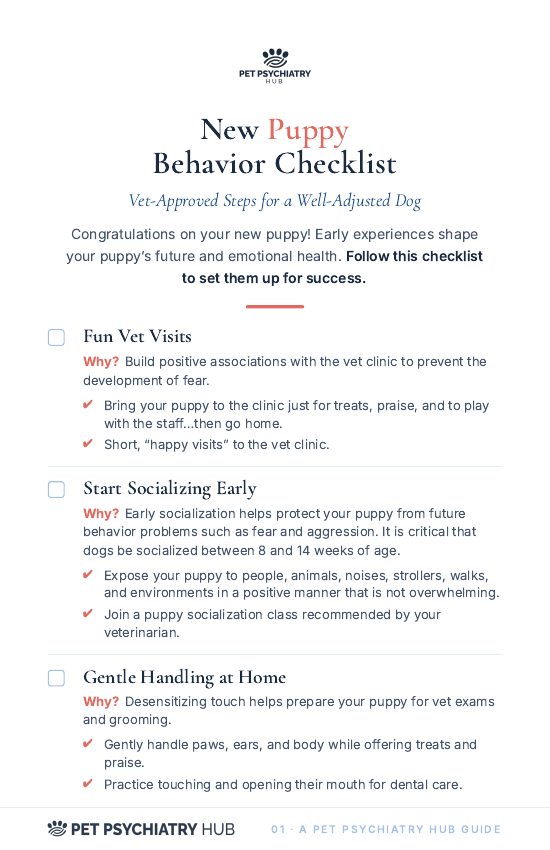
Free companion guide
New Puppy Behavior Checklist
Vet-approved steps for a well-adjusted dog, starting in the critical window.
Get the free guideThe fantasy of the family dog is a dog who is always gentle, never needs much management, naturally loves every child, and fits into the household without disruption. The reality is that most dogs need structure, training, exercise, and supervision. They have bad days. They may be afraid of certain things. They need time to learn the rules of your home. And they do not arrive understanding that toddlers are not threats.
Realistic expectations also mean planning for the unglamorous parts. Veterinary bills, unexpected behavior issues, middle-of-the-night emergencies, chewed belongings, and the slow process of house-training all come with dog ownership. Families who are surprised by these things often blame the dog. The dog is simply being a dog. The question is whether the family was prepared for that.
The dogs who do best in families are not the ones who arrive perfect. They are the ones whose families expected imperfection and built a plan around it.
The parent responsibility rule
Children can absolutely help care for a dog, and doing so can teach responsibility, empathy, and routine. But the dog's wellbeing cannot depend on a child's follow-through. Children forget, get busy, lose interest, or leave for college. A dog who is fed, walked, trained, and supervised only when a child remembers is a dog at risk.
This means the adults must be willing to be the primary caregivers from day one. If the kids help, wonderful. If they do not, the dog still gets fed, exercised, socialized, and taken to the vet. Before you bring a dog home, make sure the adult schedule can support this without resentment, because the dog will notice the resentment and the household will suffer for it.
Safety: the conversation every family needs
Most dog bites to children come from the family dog or a dog the child knows. These bites are rarely random; they usually happen when a dog is stressed, cornered, startled, or in pain, and the child does not recognize the warning. Teaching kids to read a dog is one of the most protective things you can do.
Start with the basics before the dog arrives. A dog is not a stuffed animal. They do not want to be hugged around the neck, ridden, pulled by the ears, or approached while sleeping. They need space when they are eating, resting, or caring for puppies. They should never be chased or cornered, even in play. If a dog moves away, the child must let them go.
Common stress signs kids can learn
- Lip licking or yawning when not tired or hungry.
- Turning the head away or walking away from the child.
- Showing the whites of the eyes, often called whale eye.
- A stiff body, frozen posture, or a tight, fast tail wag.
- Ears held back and low, or a tense, closed mouth.
- Growling, which is a warning, not misbehavior.
Dos and don'ts for children
- Do approach quietly and let the dog sniff first.
- Do pet gently on the side or chest, not over the head.
- Do give the dog space when they are eating, sleeping, or resting.
- Don't hug, kiss, or climb on the dog.
- Don't chase the dog if they walk away.
- Don't scream or grab at the dog, even in excitement.
These rules protect the dog as much as the child. A dog who learns that children are predictable and respectful is far more likely to relax around them. A dog who is repeatedly startled, cornered, or handled roughly learns that children are unsafe, and that is when problems begin.
Plan for the first weeks
The first few weeks set the emotional tone for the relationship. Create a safe space the dog can retreat to, a crate or a quiet room, where children are not allowed to follow. Set a routine for feeding, walks, and rest. Supervise every interaction between the dog and children, and use baby gates or leashes to prevent rehearsal of unwanted behavior. Reward the dog for calm choices, and keep the environment predictable while they adjust.
It is also worth deciding in advance when you will call for help. A dog who is growling, snapping, guarding food or toys, or showing persistent fear in the first weeks is not a bad dog; they are a dog who needs a professional plan. The sooner you get qualified guidance, the faster the situation resolves and the less likely it is to become dangerous.
More resources for families are coming
This article is the foundation. I am building additional family resources, including a printable dog safety checklist for kids, a guide to introducing a new dog to children, and a worksheet for evaluating whether your household is ready for a dog. Those will be added to the free guides section as they are ready.
For now, the best next step is to take the family dog quiz together. It is designed for grown-ups and kids to answer side by side, and it will help you identify the kind of dog who is most likely to thrive in your specific home. Then download the new puppy behavior checklist to start building good habits from the first day.
© 2026 Rachel Malamed, DVM · Pet Psychiatry Hub. This content may not be reproduced without permission.